
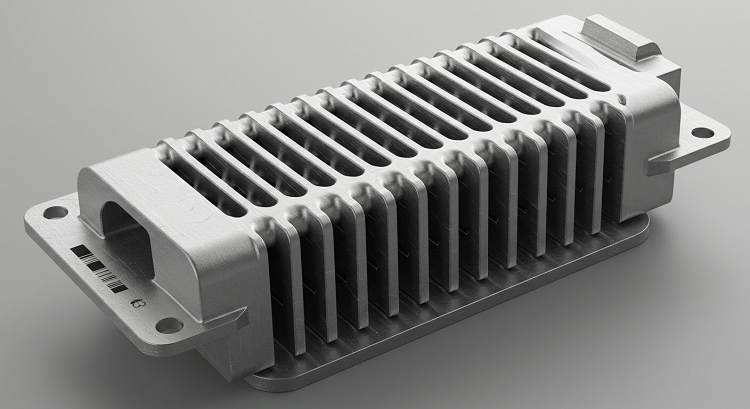

Variable Refrigerant Flow (VRF) systems are a popular option for residential and commercial high-rise buildings due to their high efficiency, zoning potential, and precise temperature control. VRF systems rely on the rapid redistribution of refrigerant to different indoor units, and therefore their thermal performance and reliability are of the utmost importance. In this context, the application of microchannel heat exchangers, and in particular microchannel condenser units, has introduced substantial improvement regarding efficiency, durability, and system flexibility.
One of the most important benefits of microchannel technology when used in VRF is that it has the ability to handle dynamic load conditions with minimal loss in performance. Unlike traditional copper-aluminum coils which are prone to refrigerant maldistribution caused by simultaneous heating and cooling cycles, microchannel condensers use flat aluminum tubes with multiple internal channels. The advantage of this is homogeneous flow distribution and faster heat rejection for stable performance across a range of refrigerant volumes and temperatures.
In VRF systems, where the outdoor unit must manage complex refrigerant routing based on zone demand, stable condensing temperatures are imperative. The greater surface area and better fin geometries of microchannel condensers provide closer temperature control, with fewer compressor cycles and better system responsiveness in general. This means less energy consumption and better part-load efficiency—a prime consideration in multi-zone applications where cooling loads vary throughout the day.
Table of Contents
Lightweight Design Promotes Compact System Integration
A second key advantage of the use of microchannel condenser technology in VRF systems is that it is light and compact. Outdoor and rooftop mechanical spaces are often limited, especially in urban or retrofit installations. Traditional condenser coils are often large and heavy, and thus harder to install and in need of extra structural support. Microchannel designs, however, offer equivalent or superior thermal performance in a smaller size, which allows engineers to design more compact outdoor units without a loss of capacity.
The lighter weight also makes handling and maintenance easier, especially in high-rise installations where rooftop access is limited. Technicians appreciate the easier coil cleaning and replacement, while building owners appreciate longer service intervals thanks to the enhanced corrosion resistance of aluminum-based microchannel designs.
Furthermore, the low refrigerant charge of microchannel condensers is well-suited for newer VRF systems that are converting to low-GWP refrigerants. With regulatory pressure to reduce global warming potential (GWP) on the rise, minimizing refrigerant volume is a strategic advantage. Microchannel condensers ease the transition by delivering high thermal output with less fluid—reducing environmental impact as well as operational cost associated with refrigerant handling and leak detection.
Durability and Corrosion Resistance in Real-World Conditions
Durability plays a significant role in the long-term operation of VRF systems, especially in coastal or industrial environments where contact with moisture, salt air, or chemical vapors cannot be avoided. Standard condenser coils made of copper and aluminum are susceptible to formicary corrosion, leading to premature leakage and costly repairs. Microchannel condensers, which are designed primarily of aluminum and often treated with durable hydrophilic coatings, are far more resilient to such environmental stresses.
This longevity makes them particularly well-suited to VRF applications where ongoing performance and minimized downtime are paramount. Microchannel condensers provide a tough, low-maintenance solution that maintains years of faultless service whether mounted in hotels, office skyscrapers, or combined developments.
For engineers considering component upgrades or new VRF installations, the transition to microchannel technology presents real advantages that extend beyond thermal performance. From less maintenance requirements and extended service life to simpler integration within confined mechanical spaces, these heat exchangers are proving a sound investment in the changing world of commercial HVAC.
Conclusion: A Strategic Fit for High-Performance VRF Installations
As VRF systems continue to penetrate commercial markets, the technologies that allow their performance must keep up. Microchannel heat exchangers, as used in microchannel condenser units, offer an appealing combination of efficiency, compactness, and durability—qualities which directly equate to added value for VRF installations today.
Upgrading current systems or creating new constructions, with microchannel technology, VRF performance is at its best—not at the expense of sustainability or cost-effectiveness in the long run. For engineers seeking to maximize thermal management in harsh climates, embracing microchannel condensers isn’t merely an engineering advancement—it’s a move toward more intelligent, more durable climate control.